The Zenoh Report
October 2025
Issue #1 — Launch & Security by Design
Launching The Zenoh Report

Innovations in Zenoh and its ecosystem are moving so fast that even those of us at the core sometimes need a moment to catch our breath. That's exactly why we're launching The Zenoh Report — your monthly digest of highlights, stories, and events shaping the future of cloud-to-microcontroller data in motion, data at rest, and computations.
Technology Highlights: Security by Design
It is nowadays well understood and accepted that 60% to 70% of security related issues stem from memory mis-management. With the increasing dependence of our society, critical infrastructures, services and individual lives on digital technology it is understandable that security is becoming a growing concern. Governmental organizations such as CISA (US cyber defense agency) have launched a campaign called Security by Design to drive the roadmap to transition toward memory safe programming languages. As part of this campaign, there is a request for companies to have a defined strategy, by January 2026, on how to move toward memory safety.
The good news is that Zenoh is "Security by Design" ready! Zenoh is entirely written in Rust and has built-in support for security including authentication, encryption and access control. ZettaScale also provides extensions for zero-trust for those that require it.
Census Labs recently performed a security assessment for Zenoh and the results were extremely positive. All security concerns considered were addressed with a single exception — support for end-to-end encryption (this is a consequence of hop-to-hop routing). That said, if you have no trust in your infrastructure, end-to-end encryption is relatively easy to implement above the protocol layer — we've already done the heavy lifting for you. We are considering adding it as one of the zenoh-ext in the near future.
But how about embedded systems? Currently, Zenoh-Pico, which is the Zenoh protocol implementation for microcontrollers, is implemented in C. There are various elements to consider. First, if your microcontrollers don't communicate directly with the outside, but instead do it through a Zenoh router (which is written in Rust), then you are well protected. On the other hand if your micro-controllers are exposed into the wild, then the only reassurances we can give you are that (1) Zenoh-Pico undergoes static analysis as part of its CI, and (2) it is (mostly) developed in MISRA-C, which also limits the potential for memory issues.
That said, we are preparing the transition toward Rust also for microcontrollers. As a consequence of the increasing number of requests from the user community we are developing a Rust no-std implementation of the Zenoh Protocol. We have already something basic running in our labs — stay tuned because I'll share the latest on this newsletter.
Release Tracker: Zenoh 1.5.x — Hong Red Dragon
Starting with version 1.5.0 Zenoh has entered its Hong Red Dragon epoch — where an epoch usually lasts for around six months.
This release was the first to break the 10M msgs/sec, and brought a series of improvements including:
- Faster and safer Shared Memory
- Simpler config for access control, downsampling, and QoS
- DSCP link control to fine-tune service classes
- Support for weighted routing graphs
- QUIC datagram support
- Zenoh-Pico for ThreadX
The release blog post provides a detailed description of the new features.
Latest Release: 1.5.1
The main features introduced by 1.5.1 are (1) transparent use of shared memory for large messages, (2) support for downsampling put and delete messages, as opposed to only push.
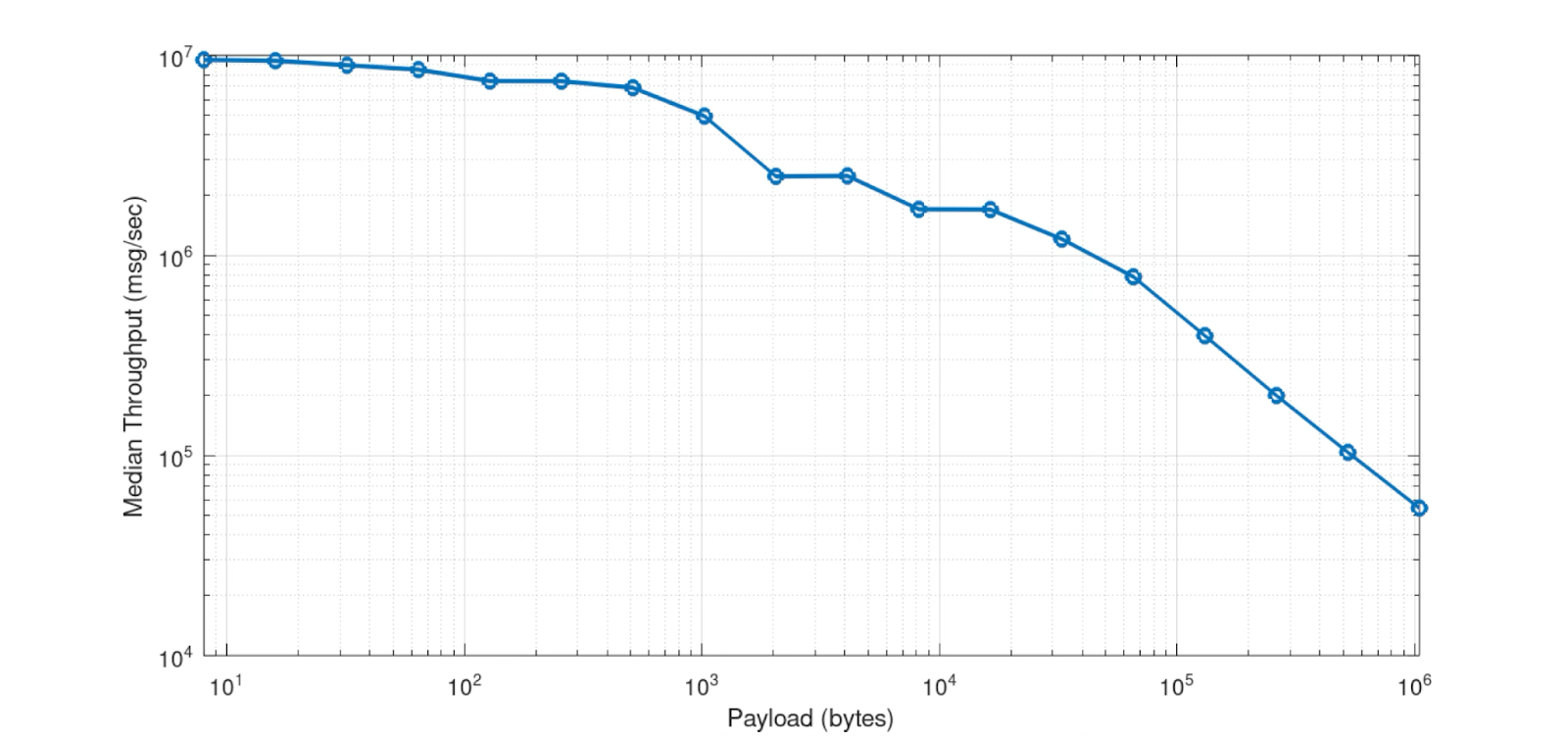
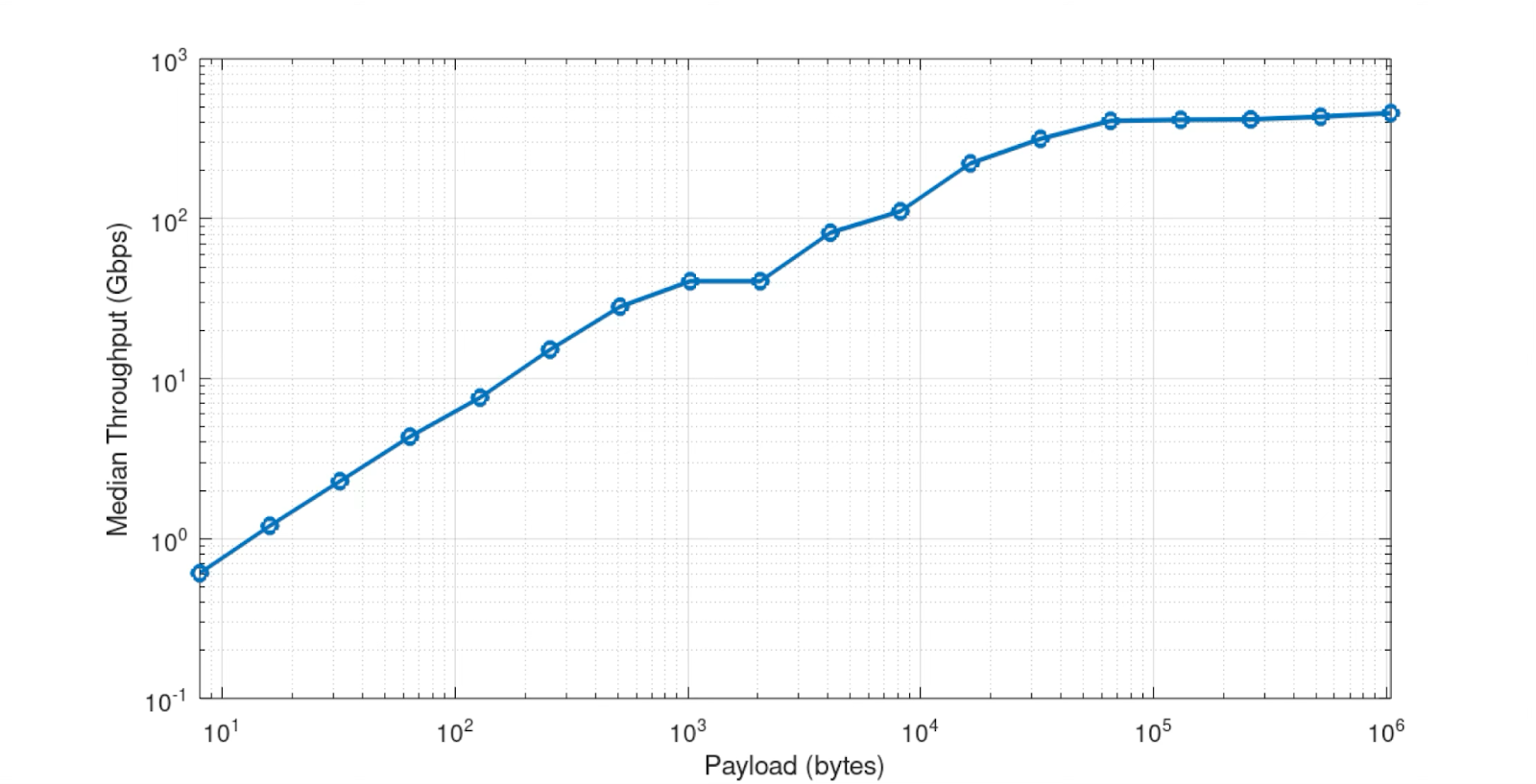
The graphs below show throughput on localhost, in both msg/sec and Gbps. From these it is easy to read that Zenoh achieves 11M msgs/sec for 8-byte payloads, 1.2 Gbps for 16-byte payloads, and 410 Gbps for 64 KB payloads.
For those of you that are not familiar with the Zenoh protocol at a message level, the advantage of being able to apply downsampling for Put/Delete as opposed to Push messages ensures that you can downsample publications of resources but not their deletion, which is usually what you want if you have distributed storages in your system.
Community Spotlight — Pico ROS
This month the community spotlight is on the Pico ROS project from Ubiquity Robotics. Pico-ROS builds a thin layer above Zenoh-Pico to bring ROS 2 abstractions to microcontrollers. It runs on anything already supported by Zenoh-Pico, including ESP32, Arduino, STM32, and more.
New Projects — ROS-Z
Security concerns also apply to robotics, but based on what I've explained above, if your ROS 2 robot is using the Zenoh RMW you should feel reassured. The default ROS 2 deployment uses a Zenoh router for R2X, this minimizes the surface of attack for your robot to just one communicating entity written in Rust.
That said, we have been working also with a full Rust stack called ROS-Z that runs natively on Zenoh and interoperates with ROS 2. The main motivations for building ROS-Z were to (1) have a full Rust stack, (2) provide ergonomic API to Rust programmers while keeping the ROS 2 abstractions, (3) native support for zero-copy and shared memory, (4) independence from the serialisation format.
ROS-Z is still in its early development, but we have almost feature parity with ROS 2. Give it a try and let us know what you think about it.
Upcoming Webinar
Unveiling Zetta R2 — October 14, 2025.
Imagine being able to effortlessly record and replay data from Zenoh or any third-party protocols like MQTT and DDS with just a few clicks. Now, picture having the flexibility to do this locally, in the cloud, or wherever suits your system best. Join this webinar to learn how Zetta R2 supports these and more features.
Hot from the Press
There is an increasing number of research papers published on Zenoh. Below a list of the latest:
- "Comparison of FastDDS, Zenoh and vSomeIP: Automotive Middleware Performance" (2025) — Analysis of Zenoh's performance compared to other middleware in automotive scenarios. arXiv:2505.02734
- "Leveraging decentralized communication for privacy-preserving federated learning" (Feb 2025) — Uses Zenoh in federated learning contexts. ScienceDirect
- "On the performance of Zenoh in Industrial IoT Scenarios" (Mar 2025) — Performance evaluation of Zenoh for industrial IoT. Ad Hoc Networks / ScienceDirect
- "Facilitating distributed data-flow programming with Eclipse Zenoh" (2025) — Discusses data-flow programming using Zenoh. ACM MobiCom workshop
Events
The Zenoh team will be attending:
- ROSCon 2025 — October 27th–29th, Singapore
- ROSCon FR & DE 2025 — November 17th–20th, Strasbourg
- ROSCon India 2025 — December 2025